

Physics Teaching Observatory and Classroom Photo by Don Carona
Date: November 20, 2026
Time: 7:30 p.m.
Location: TAMU Physics Teaching Observatory Classroom, Fishtank Road, College Station, TX
Program: Life in Extreme Environments - Mars, Jupiter and Beyond
Speaker: Roger Sassen, PhD
Life in the outer, icy planets and moons of our solar system may be more common than generally suggested. Recent NASA missions to Mars and the outer planets appear to have raised entirely new questions. The almost inevitable biogeochemistry of life at cold methane vents thousands of meters deep in Earth's oceans are an analog. These organisms appeared on Earth 3 to 4 billion years ago in the refuge of the deep oceans, and evolved to prosper on otherwise toxic methane, carbon dioxide, hydrogen sulfide, and nitrogen compounds without light or oxygen. They survived the five main extinction events in the fossil record as the planet itself changed. Chemosynthetic microbes co-evolved with giant tube worms, sulfur-rich bivalves, and mysterious ice worms. Similar chemistries and extreme conditions existed or still exist in our solar system. Understanding the long history of the poorly known fauna constrains speculation on life elsewhere in the universe.
About the Speaker
Roger Sassen graduated in 1975 from Lehigh University in Pennsylvania with a Ph.D. in Geological Sciences, all expenses earned via the GI Bill after serving as a Military Intelligence Officer. He was an energy company manager and Research Scientist for 14 years (Getty, Texaco, BP) and held professor's rank at LSU. Ole Miss, and Texas A&M University for a quarter century until 2008. He is best known for studying life in extreme environments during approximately 55 deep submergence dives in the Pisces II, Johnson Sea-Link, the ALVIN, and the U.S. Navy NR 1 Nuclear submarines. Dr. Sassen published many papers in peer review journals and continues to write.
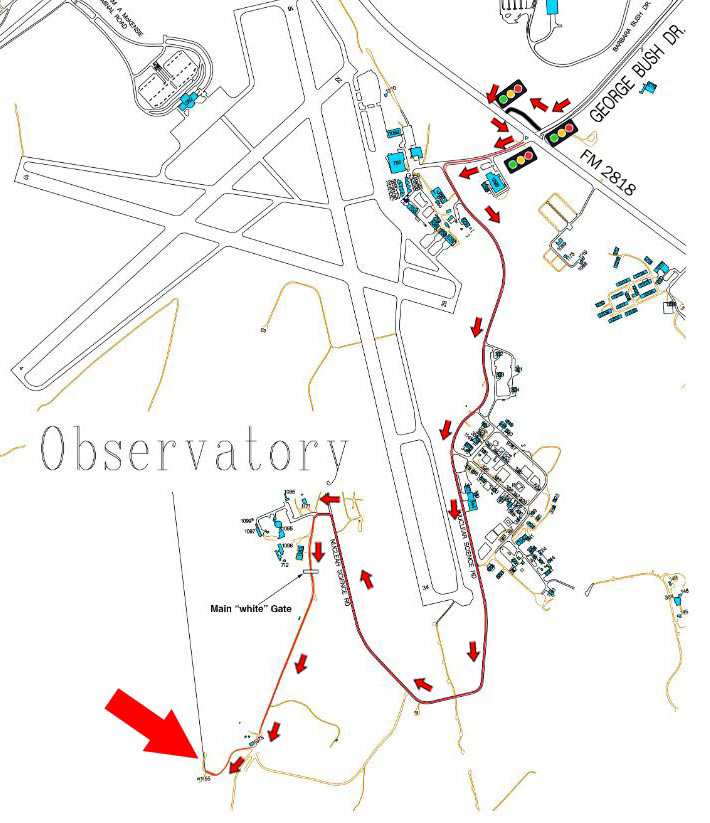
Directions: - Traveling from George Bush Dr.
1. From George Bush Drive, cross over FM 2818. (You will have to turn right at the light at the intersection of FM 2818 and George Bush Drive, get in the left lane and turn left at the first traffic signal to make the U turn to travel in the south bound lane of traffic on FM 2818.
2. Turn right on George Bush Dr West.
3. Turn left on Nuclear Science Rd.
4. Follow Nuclear Science Rd around the airport.
5. Turn Left at the Nuclear Science Center
6. Follow the road past the main gate.
7. This road will end in the parking lot of the TAMU Physics Teaching Observatory Classroom.

CONTACT:
contact@brazosvalleyastronomyclub.org
Coordinator - Warren Bracewell
MEMBERSHIP QUESTIONS:
membership@brazosvalleyastronomyclub.org
Coordinator - Lee Smith
PROGRAM REQUEST:
outreach@brazosvalleyastronomyclub.org
Coordinator - Mark Spearman, PhD
WEBSITE AND NEWSLETTER:
webmaster@brazosvalleyastronomyclub.org
Webmaster/Newsletter - Ginger Wentrcek
GOOGLE DISCUSSION GROUP:
https://groups.google.com
Coordinator - Randy Light, M.D.
© Brazos Valley Astronomy Club

Follow Us on Facebook

Member: Astronomical League

Member: Night Sky Network
The Brazos Valley Astronomy Club is a non-profit group located in Bryan-College Station, Texas.
Our goal is to promote astronomy and related science as a hobby for people of all ages.
